
The textile industry has always been defined by its ability to adapt, evolve, and innovate. Among its many transformations, the shift from traditional printing methods to digital textile printing marks one of the most significant leaps forward in both creativity and efficiency.
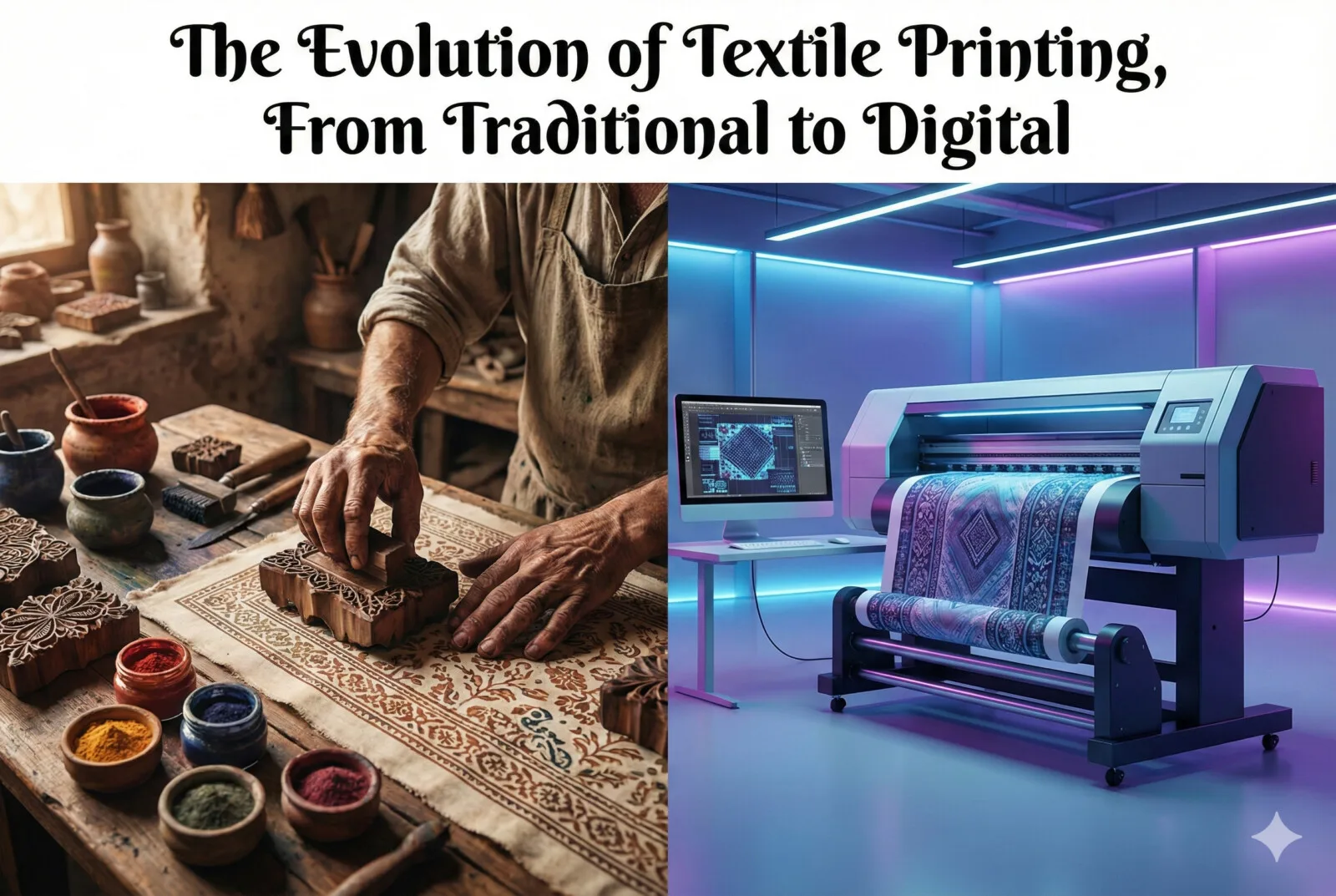
For centuries, block and screen printing dominated fabric decoration. These methods required manual craftsmanship and large quantities of water, dyes, and auxiliaries. While they produced beautiful results, they also demanded time, space, and resources. The introduction of rotary and flatbed screen printing offered greater speed, but these still relied on heavy equipment, high energy use, and limited design flexibility.
Then came the digital era, a revolution that redefined textile printing. Digital inkjet printing allowed designs to be printed directly onto fabric using specialized inks, eliminating the need for screens, reducing water consumption, and enabling intricate, high-resolution patterns.
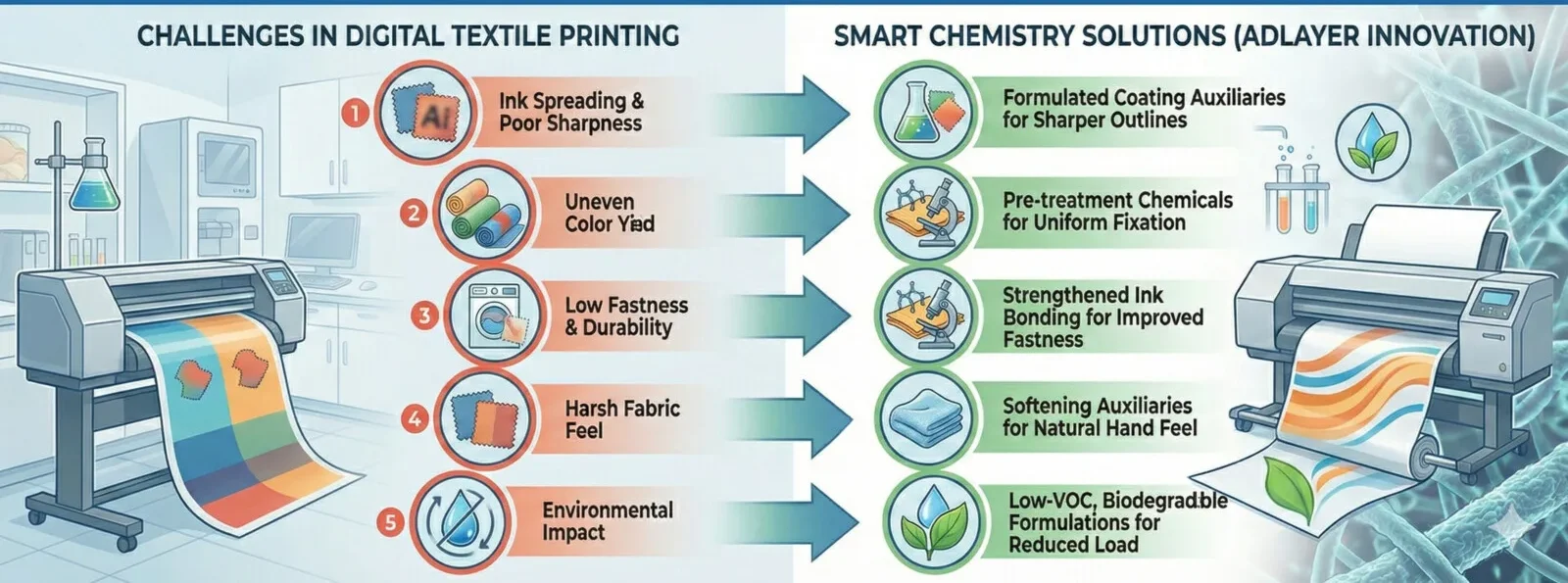
However, this evolution didn’t just depend on machines; it relied heavily on chemistry. Pre-treatment and coating agents, thickeners, and fixatives became essential in ensuring that inks adhered properly, colors appeared vibrant, and prints remained durable.
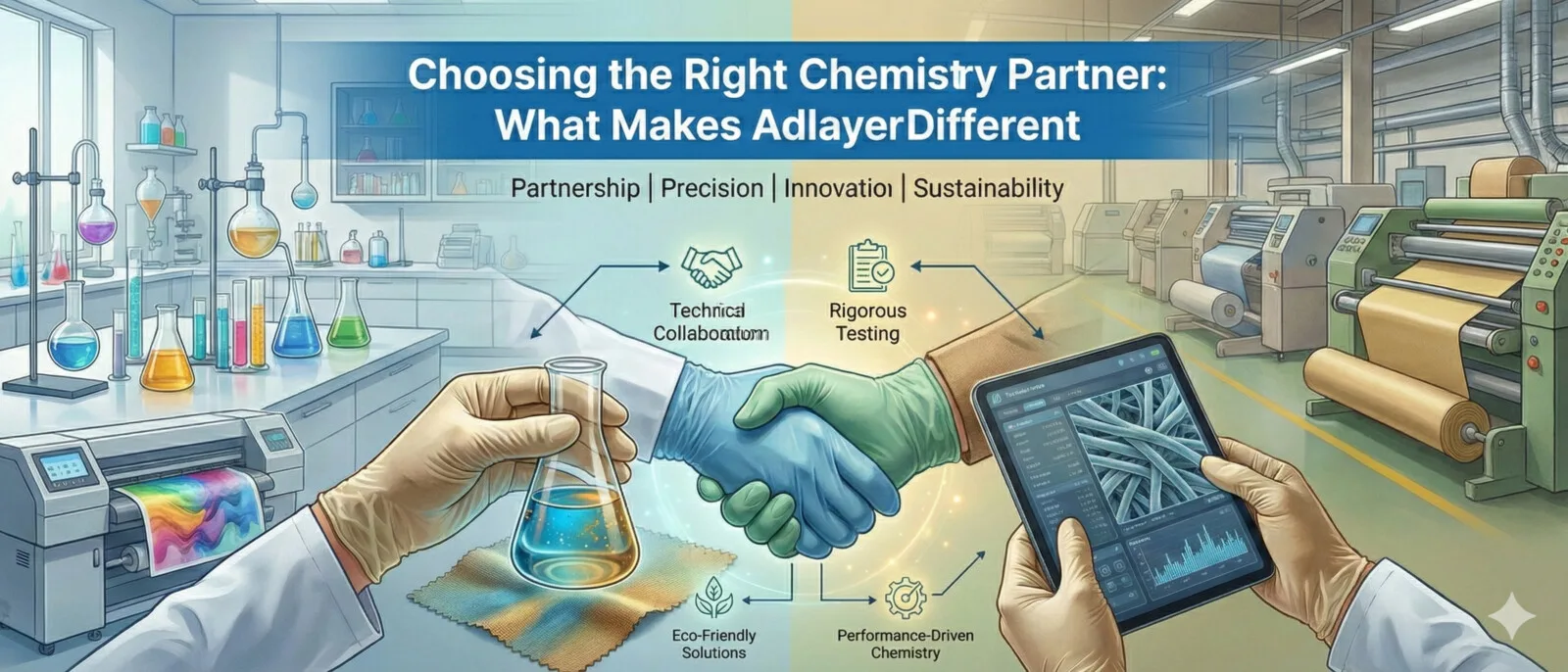
At Adlayer, we’ve embraced this evolution by developing smart digital printing chemicals that bridge technology and textile science. Our solutions from reactive and pigment pre-treatments to coating auxiliaries help achieve sharper outlines, brighter shades, and excellent wash durability.The evolution from traditional to digital printing is not just a technological shift it’s a step toward a smarter, cleaner, and more sustainable future. And with innovative chemistry at its core, Adlayer continues to help the textile industry print progress, one fabric at a time.