
Digital textile printing has transformed how fabrics are designed and produced offering limitless creativity, shorter lead times, and reduced waste. Yet, this modern method brings its own technical challenges. Here are the five most common issues and how Adlayer’s smart chemistry helps solve them.
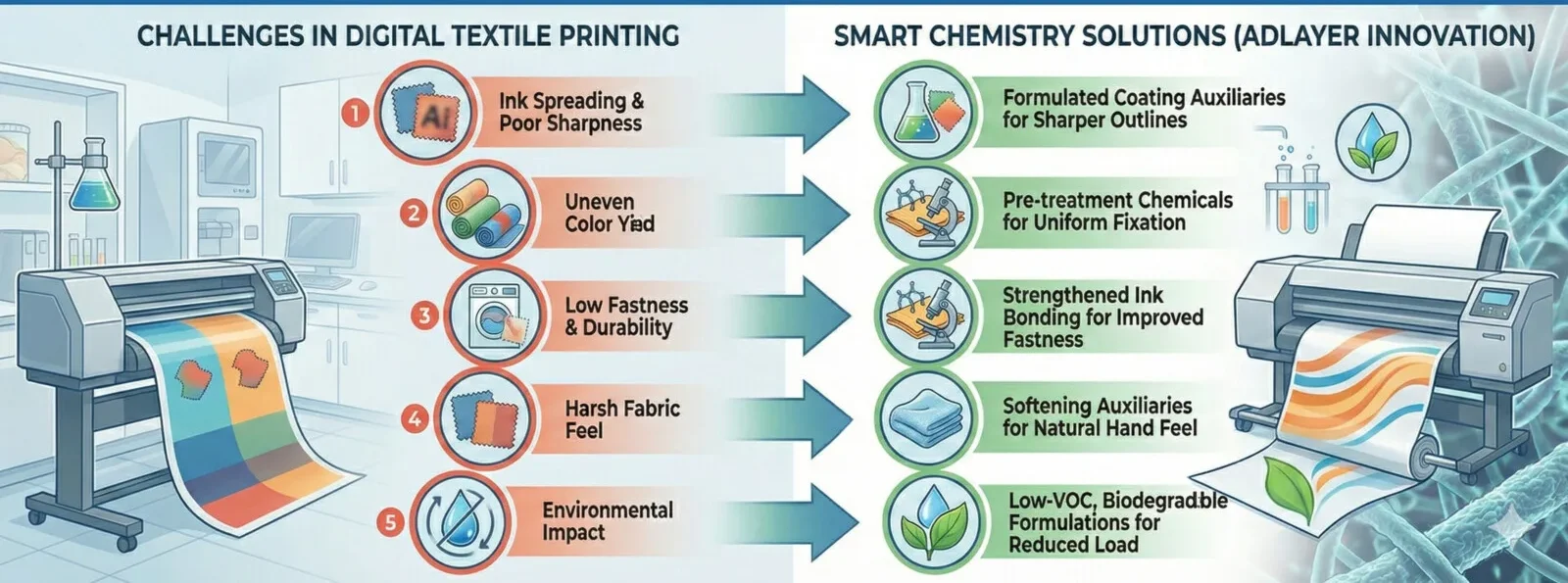
Ink Spreading & Poor Sharpness
Without proper pre-treatment, inks can spread uncontrollably. Adlayer’s formulated coating auxiliaries increase surface control, ensuring sharper outlines and defined patterns.
Uneven Color Yield
Different fabric textures and absorbency levels can cause inconsistent colors. Our pre-treatment chemicals enhance ink fixation and penetration, leading to uniform color reproduction.
Low Fastness & Durability
Fading after washing or rubbing is a frequent issue. Adlayer’s chemistry strengthens ink bonding and improves wash and rub fastness, keeping prints vivid longer.
Harsh Fabric Feel
Over-processing can make fabrics stiff. Our softening auxiliaries retain the natural hand feel while maintaining print quality.
Environmental Impact
Digital printing is more eco-friendly than traditional methods, but chemistry still matters. Adlayer focuses on low-VOC, water-based, and biodegradable formulations that minimize waste and environmental load.As the textile world embraces digital technology, smart chemistry remains its strongest ally. With Adlayer’s advanced formulations, printers can achieve the perfect balance of creativity, quality, and sustainability, every single time.