
In the intricate world of textile processing, some ingredients may not be visible but are absolutely vital. Textile esters are one such category subtle yet essential compounds that influence softness, flexibility, and overall quality.
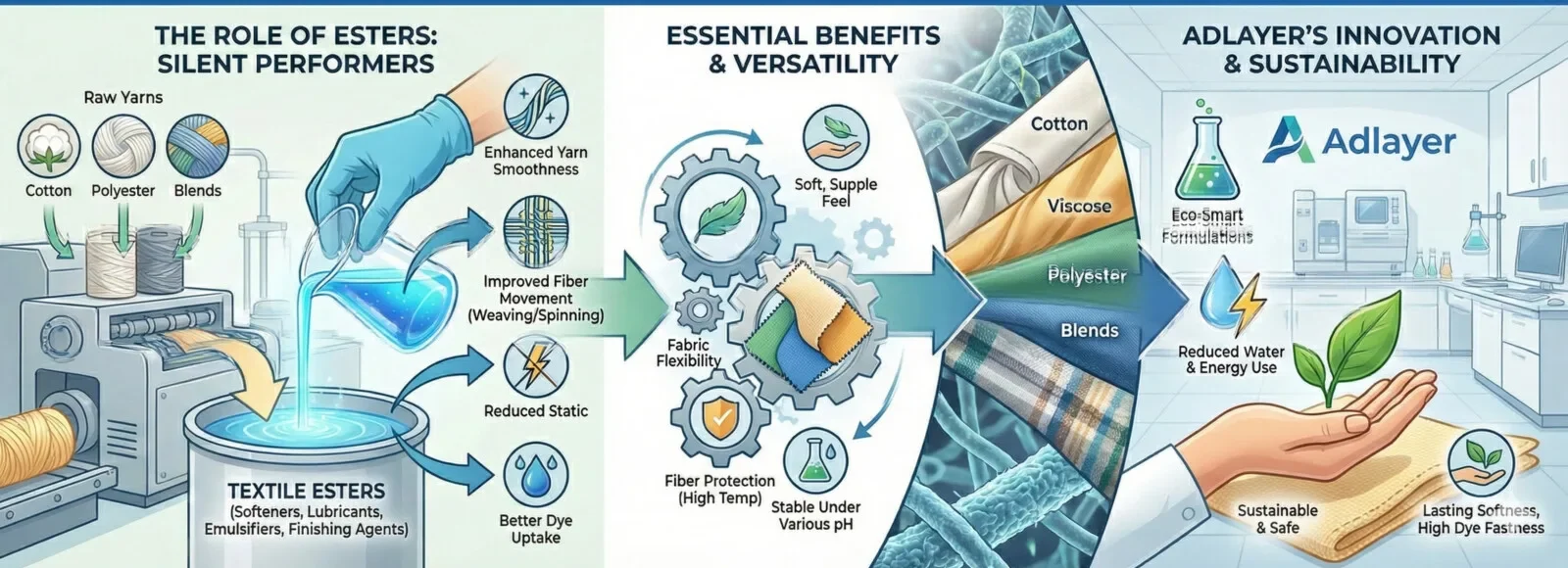
Esters serve as softeners, lubricants, emulsifiers, and finishing agents in textile manufacturing. They enhance the smoothness of yarns, improve fiber movement during spinning and weaving, and impart a soft, supple feel to fabrics after finishing. Beyond comfort, they play a functional role reducing static, improving dye uptake, and protecting fibers during high-temperature processing.
Modern textile production demands versatility, and that’s where esters shine. Their excellent compatibility with other textile auxiliaries and stability under different pH conditions make them ideal for a variety of fibers from cotton and viscose to polyester and blends.
At Adlayer, our ester range is developed with a focus on performance, sustainability, and safety. We ensure that our formulations provide lasting softness without affecting dye fastness or strength. Additionally, our esters are designed to reduce water and energy use during processing aligning with our commitment to eco-smart manufacturing.
In short, textile esters may be the “silent performers” of textile chemistry, but their impact is undeniable. With Adlayer’s innovation and precision, these essential components continue to support a smoother, softer, and more sustainable textile future.